
Last updated November 22, 2026
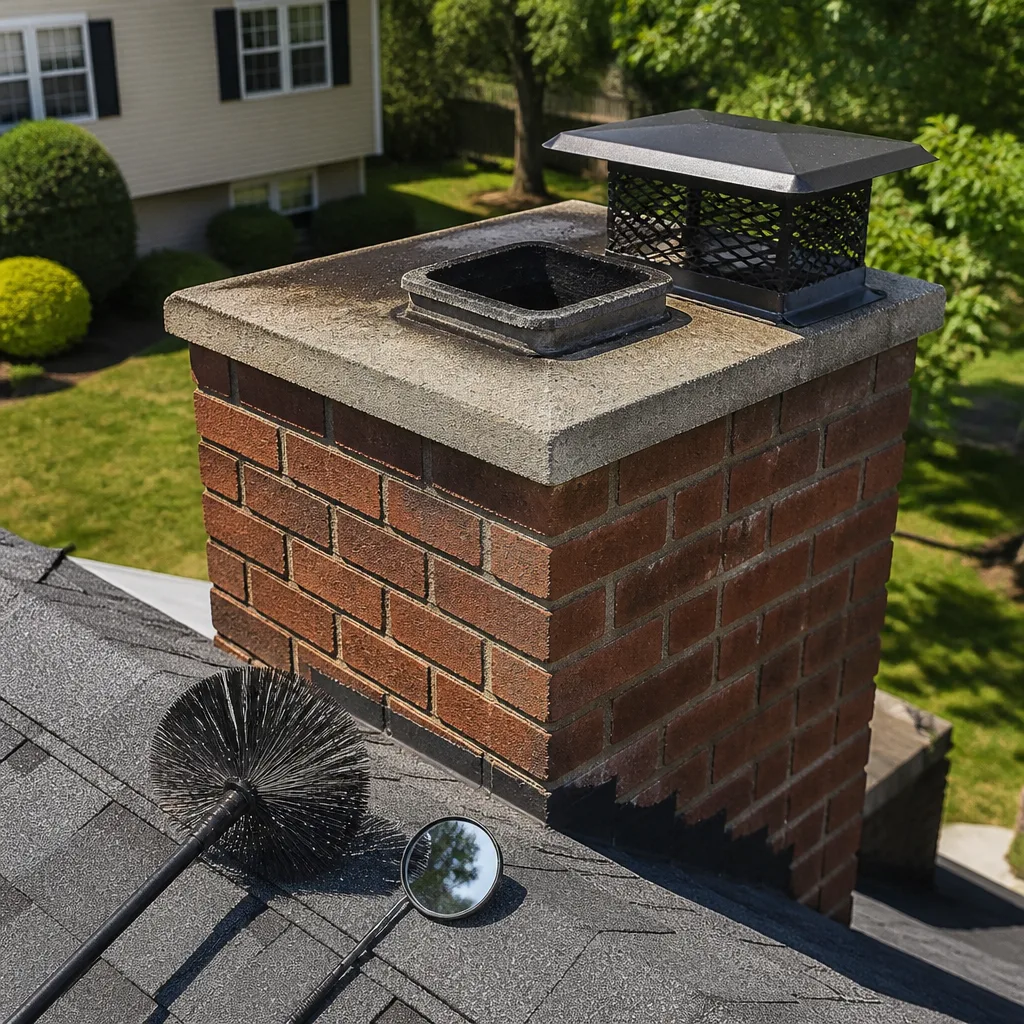 Sweep & inspection
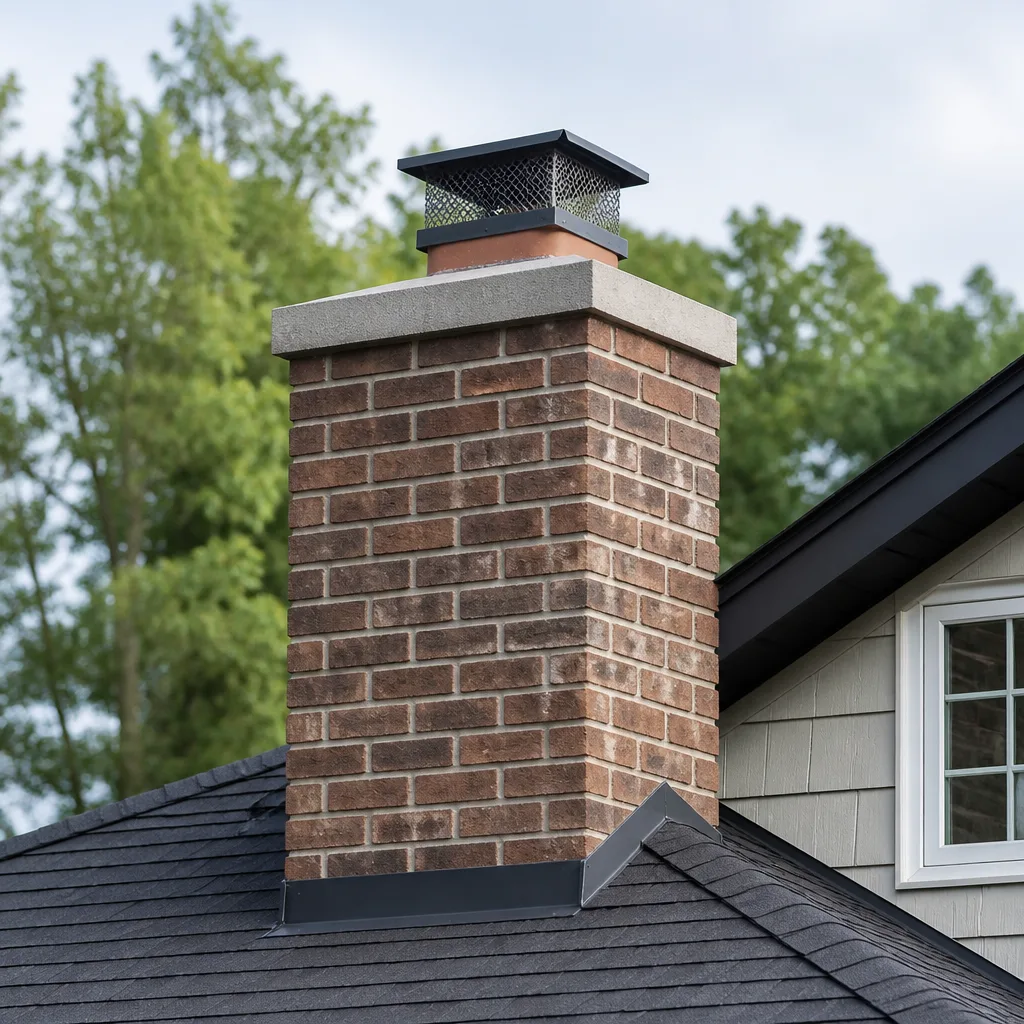 Caps & crowns
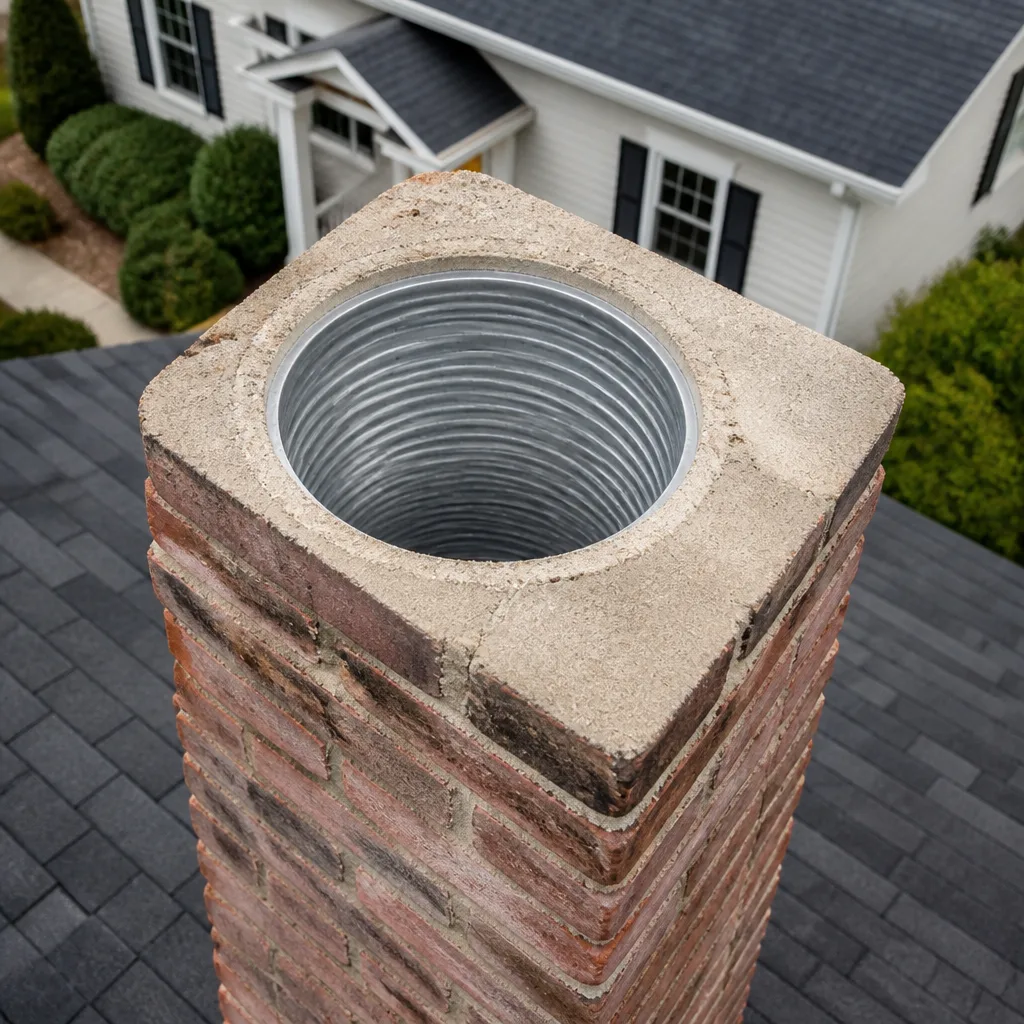 Flue relining
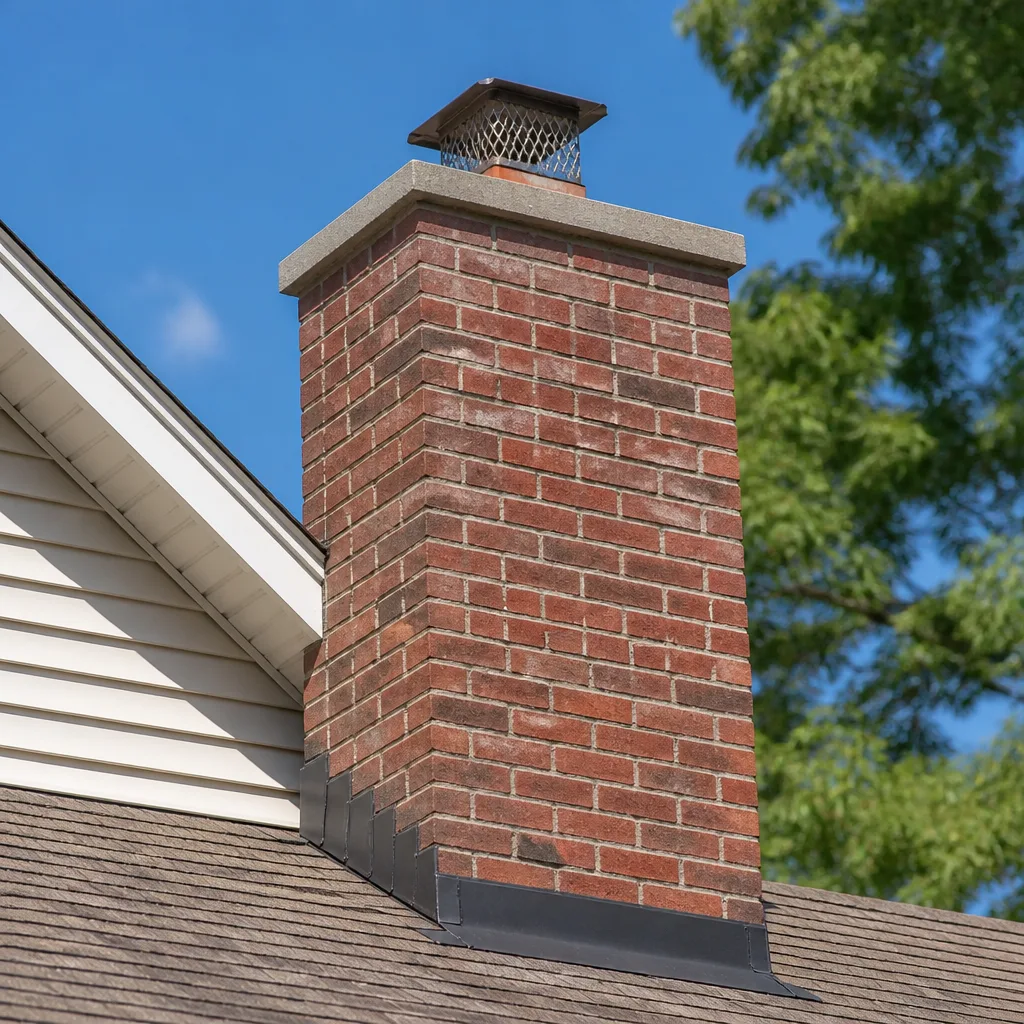 Masonry repair
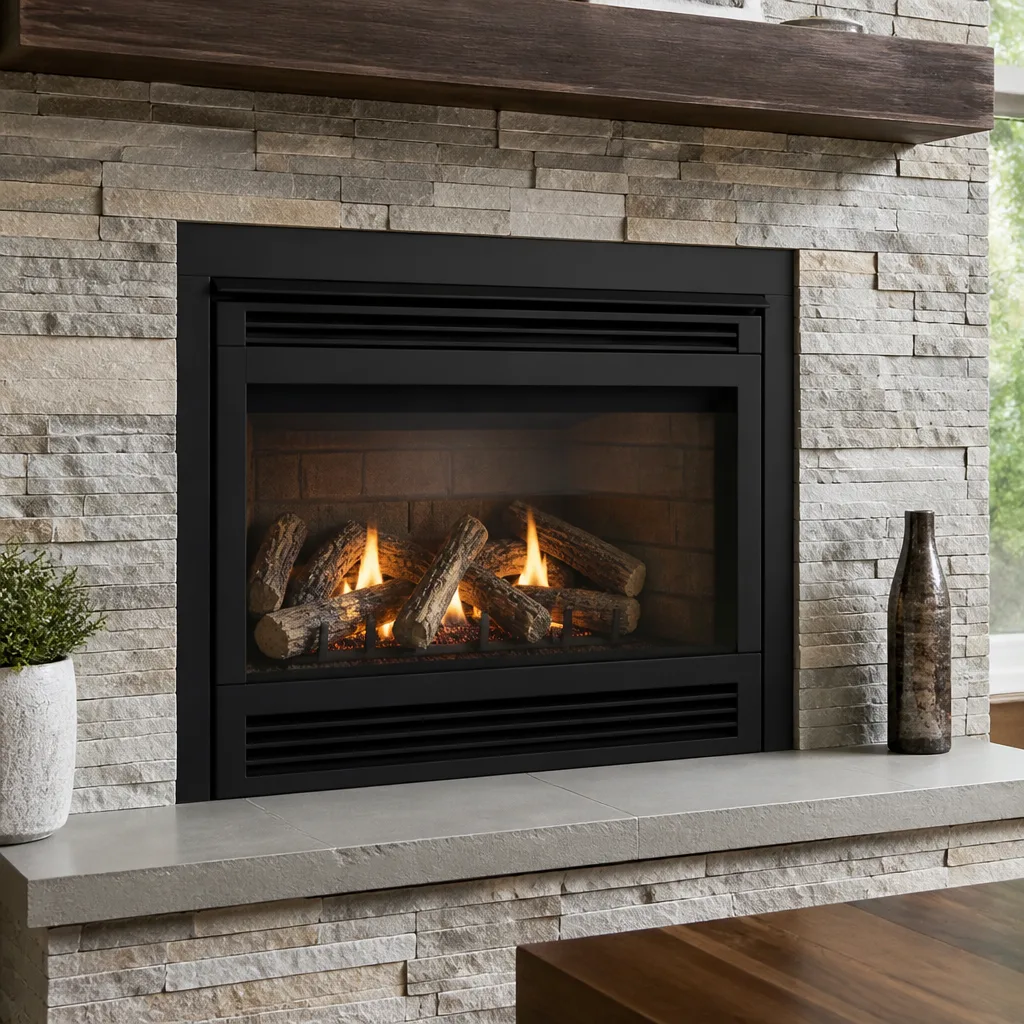 Gas fireplace service
Level 1 sweep and inspection to the NFPA 211 annual standard - flue, crown, cap, and flashing checked and photographed
Chimney sweep logs do not sweep chimneys. They loosen some creosote - which then falls where a brush and vacuum still have to collect it.
Chimney Sweep Troubleshooting in Kingwood: Common Problems and How to Fix Them
A smoky living room can mean a blocked flue, a cracked firebox, a failed damper, or simply the wrong wood. Treat the wrong one and you’ve spent money without touching the real hazard. That’s the trap most homeowners fall into before they call anyone: smoke, odor, and weak draft all look like the same problem from the sofa, but they travel through the chimney in completely different ways. In this guide, we’ll walk you through reading the actual evidence inside your firebox, matching each symptom to its real cause, and knowing which findings are simple fixes in Kingwood and which ones mean the chimney system needs professional attention before the next burn season.
Quick Answer
Most chimney problems in Kingwood fall into four categories: blockages (nesting material, soot buildup, fallen tile), draft failures (backdraft, cold-flue reversal, negative pressure inside the house), component wear (damper, cap, crown, firebox mortar), and structural issues (cracked flue tile, deteriorating liner, masonry damage). The fix depends entirely on which category you’re actually dealing with. A sweep and camera inspection is what separates them, because smoke and smell alone can’t tell you whether you need a $200 cleaning or a liner repair.
If you want a straight answer on your own chimney, call (844) 960-2344. We answer 24/7. Fast dispatch from 7am to 7pm, Sunday through Friday.
Styles & brands we work with
- Sweep & inspection
- Caps & crowns
- Flue relining
- Masonry repair
- Gas fireplace service
Table of Contents
- Symptom-to-Cause: Reading What Your Fireplace Is Telling You
- Is It Backdraft, a Draft Reversal, or a Blockage?
- The Fireplace Smell Test: What Each Odor Reveals
- Why a Clean Chimney Can Still Smoke
- What You Can Safely Check Yourself vs. What Needs a Camera
- When a Finding Becomes a Code-Compliance Issue in Kingwood
- Seasonal Troubleshooting: Why Mild Winters Still Matter
- Repair, Resurface, or Reline: Choosing the Right Fix
Symptom-to-Cause: Reading What Your Fireplace Is Telling You
Before any diagnosis is possible, you have to separate the symptoms. A fireplace that smokes, smells, or draws poorly is giving you three clues at once, and each points somewhere different. Here’s the mapping we use when we arrive on a call in Kingwood:
- Smoke rolls out the top of the firebox and into the room rather than up the flue. This is usually a draft or blockage problem, rarely a structural one.
- Smoke exits fine but the fire burns lazy and low with dark tips and weak flame. That points to insufficient draft, often caused by flue sizing or a house-pressure issue.
- Odor without smoke – a musty or acrid smell when the fireplace is off – points to creosote, moisture intrusion, or debris.
- Smoke and odor both worsen in specific weather (damp, still, or windy days). This is a pressure or cap-height issue, not a cleaning issue.
- Visible cracks, crumbling mortar, or rusted metal inside the firebox. That’s a structural finding and it takes precedence over everything else.
Homeowners in Kingwood’s older neighborhoods often come to us convinced they need a full reline because of a smoky fire, when the actual problem is a partially blocked flue or a cap that’s too short for the roof pitch. On newer construction, the issue is reversed: the chimney drafts fine, but pressure from a tight house pushes smoke back inside anyway. Two very different fixes. Same symptom.
If you’re unsure which symptom you’re reading, the reliable next step is a proper chimney sweep and inspection. For everything from sweep to structural repair, that diagnostic visit is where the answer lives.
Is It Backdraft, a Draft Reversal, or a Blockage?
These three get lumped together constantly. They behave differently, and the fix for one won’t fix the others.
- Backdraft happens when air pressure inside your home is lower than outside. The chimney becomes a path for air to flow down and into the room instead of up and out. Common triggers: exhaust fans, kitchen hoods, dryer vents, bath fans running at the same time as a fire, or a tightly sealed house.
- Draft reversal (also called cold-flue reversal) happens when the flue is colder than the room. Cold, dense air sits in the chimney and pushes down. It’s most common on the first fire of the season or a cool morning after a warm day. You can often hear it: a soft rush of air down into the firebox before you even light the fire.
- Blockage is physical. Nesting material, a fallen flue tile, heavy soot or creosote, or a bird inside the chimney. If you get smoke rolling back no matter the weather or house pressure, suspect a blockage.
The way to distinguish them at home is simple. Open a window a crack and light the fire. If the smoking stops, you likely have a negative-pressure problem, which is backdraft. If it doesn’t, it’s more likely a blockage or flue issue. Cold-flue reversal usually shows up as slow starting, not smoke. If the fire struggles to catch and then drafts fine once it’s hot, that’s the cold-flue pattern.
Blockages are the ones we worry about most. Soft material (a bird’s nest or a woolly mass of creosote) can ignite. Hard material (fallen tile, a dislodged mortar joint) can deflect smoke and gas back into the house. Neither is something to troubleshoot by eye. Call (844) 960-2344 and we’ll book a sweep and camera inspection.
On a side note worth knowing: in a two-story Kingwood home, the chimney on the back wall is often shorter relative to the roof peak than homeowners assume, which shortens effective stack height and makes backdraft worse. That’s a cap-height or flue-extension conversation, not a cleaning one.
The Fireplace Smell Test: What Each Odor Reveals
If your fireplace smells but doesn’t smoke, the odor is a clue about a specific condition. Different smells come from different sources:
- Musty or damp – moisture is entering somewhere. Usually a failing cap, a cracked crown, or a masonry leak letting water into the firebox or flue. Musty odor often comes with dark staining on the firebox walls.
- Acrid or sharp – fresh creosote or a hard, glazed creosote layer. Creosote that has baked on tends to smell sharper than the powdery stage. Acrid smell = stop burning until it’s cleaned.
- Sulfuric or rotten-egg – rare but serious. This usually means moisture is reacting with creosote or masonry, or something has died in the chimney. A dead animal in the flue is far more common than homeowners expect, especially in Kingwood homes near wooded greenbelt areas.
- Smoky even when there’s no fire – residue buildup combined with pressure fluctuation. The chimney is acting as an exhaust path for the house’s air, drawing stale, smoky air into the room.
- No smell at all but smoky on first burn – normal, usually. Cold-flue reversal. Not a defect.
We tell every homeowner the same thing: an odor is not a diagnosis, it’s a data point. Musty odor plus a cracked firebox is one problem set. Musty odor plus a clean firebox and good flue is another. Only the inspection tells you which one you’re living with. The next time someone tells you to just burn a hot fire to clear the smell, understand what they’re really saying: they’re telling you to burn off the top layer of creosote and hope for the best. It doesn’t address the moisture or the structural cause.
Why a Clean Chimney Can Still Smoke
You just had a sweep. The flue is clear. Your fire is still smoking. This is the most frustrating version of the problem, and it’s nearly always about geometry, not cleanliness.
Three things determine how well a chimney drafts:
- Flue size vs. firebox opening. A flue that’s too large for the firebox lets smoke slow and cool as it rises. A flue that’s too small can’t move the volume of smoke fast enough. A proper chimney matches the two.
- Chimney height above the roofline. A chimney that ends too low relative to the roof peak, nearby trees, or the surrounding roofline can get turbulent air or downdraft. The classic rule of thumb is that a chimney should extend at least a few feet above the highest point where it passes through the roof, but walk the roof with your eye and you’ll find plenty in Kingwood that don’t.
- Damper plate condition. A warped, rusted, or missing damper won’t seal, won’t open fully, and won’t control the air inlet properly. A partially stuck damper can cause smoke to back up even with a clean flue.
There’s a fourth factor: the house itself. In a home with an oversized kitchen hood or a big central-return HVAC system, the chimney is competing for air pressure. A clean chimney can’t fight that.
So when a homeowner tells us their chimney smokes but “the sweep said it was clean,” we look at three things: the cap, the damper, and the pressure. If the cap is improperly sized or the top of the flue is lower than surrounding roof obstructions, we may recommend a chimney cap & crown adjustment or a flue extension. If the damper is the culprit, fireplace repair is the answer, and we can pull the right size replacement plate.
This is where a flexible liner evaluation matters. A flue that’s the wrong shape or sized poorly for a modern appliance or insert often can’t be fixed by cleaning. Installing a properly matched liner – we work with DuraFlex flexible liner systems for these flexible configurations – brings the flue into the right geometry for the firebox. That’s a repair, not a maintenance reset.
What You Can Safely Check Yourself vs. What Needs a Camera
There’s a real difference between looking and touching. Homeowners can and should look at a few specific things inside and outside the chimney. But a lot of the actual troubleshooting requires a scope camera, and here’s the honest breakdown.
Safe to Check Yourself
- Damper plate – open and close it. Does it move freely? Does it seal flush when closed?
- Firebox walls – shine a light on the mortar joints and brick. Any loose or missing mortar, cracked brick, or white efflorescence (a powdery residue) is worth noting.
- Visible flue tile at the top of the firebox – look up. Do you see cracked or spalling tile?
- The chimney cap – is it intact? Is the spark screen torn or missing?
- Crown and masonry exterior – from the ground, look at the crown. Any visible cracks in the crown, missing masonry, or water staining on the chimney’s exterior is worth reporting.
- Odor – as covered above, smell is safe data.
What Needs a Camera Scope
- Creosote depth on the flue walls – you can’t judge this from the firebox. Creosote on the upper flue requires a video scope and, often, a sweep to establish staging.
- Cracked or spalling flue tile – many tile cracks only show up when the camera is pushed through the length of the flue, not just the first inch.
- Debris blockages in the middle or upper flue – birds, squirrels, and nesting material typically sit well above the firebox.
- Hidden moisture and masonry damage – efflorescence in a masonry joint can be the visible tip of an internal problem you need a camera to see.
- The gap between the flue tile and the masonry – only a scope or a physical inspection at a joint can confirm that.
Never put your hand into the firebox past the lintel to explore. Never go on the roof to check the crown or cap yourself. Even in a mild climate, roof access is the most common point of injury in chimney work. We’d rather you call us and describe what you see from the ground.
When a Finding Becomes a Code-Compliance Issue in Kingwood
Not every finding is a code issue. Some are just wear. Some are cosmetic. But a few findings are code-relevant and require a repair decision, not a wait-and-see.
The findings that generally cross into code territory:
- Cracked or missing flue tile that opens a path from the flue into the surrounding masonry or framing cavity. This is a fire-safety issue and touches on how most building codes treat the flue as a containment system.
- Deteriorated firebox mortar or brick to the point where the firebox isn’t containing the fire. The firebox is a structural requirement, not just a finish.
- Unsealed chase or cap that allows water intrusion into the chimney structure. Water inside masonry accelerates deterioration fast.
- A flue that doesn’t match the appliance – a fireplace insert or a gas appliance flued into a chimney that isn’t sized or lined to match. This often falls short of a code-compliant installation.
- Missing or damaged cap on an open flue where the chimney is exposed to the elements.
Harris County and Kingwood aren’t an unusual case here. The rules are the same as most of the region: if the flue doesn’t contain the products of combustion, it’s out of compliance. In practice, that means an inspection finding about cracked tile, damaged firebox mortar, or a liner that’s failed isn’t something to put on the seasonal list. It’s a repair decision in the near term.
The good news is that many of these can be resolved without a full reline. The HeatShield ceramic resurfacing system we work with is a good example. When the tile is cracked but the flue structure is sound, resurfacing the liner is sometimes a code-compliant alternative to a full reline. It doesn’t apply to every case – a flue with substantial separation, structural failure, or the wrong dimensions is still a reline. But it’s a real option that a lot of general contractors wouldn’t know to mention.
If a real-estate transaction is on the calendar, a chimney inspection is available as a standalone service, and it’s worth the investment on its own. If a finding on that inspection is code-relevant, it’s better to know it before the closing than to hear about it after.
Seasonal Troubleshooting: Why Mild Winters Still Matter
Kingwood gets four seasons, but none of them are extreme. That’s a relief for a lot of reasons, and it’s a trap for a couple more. Spring and fall are the seasons when most chimney problems actually get diagnosed, because that’s when homeowners first light a fire after months of sitting idle.
The pattern we see:
- Spring and early summer – nest-building season. Birds and squirrels are far more likely to find their way into an uncapped chimney in spring than any other time of year. A squirrel getting into the flue through a torn spark screen is one of the most common calls we get in Kingwood. If you don’t have a cap, or your cap is damaged, this is when you’ll find out.
- Late summer and fall – the pre-season sweep window. This is when a proper chimney sweep and inspection makes the most sense. The fire hasn’t been lit yet, the weather is still cooperative for any exterior work, and you’re not troubleshooting with a fire going.
- First cold snap of fall – draft problems reveal themselves. A cold-flue reversal, a stuck damper, or a partially blocked flue all show up on the first fire. If those first fires are smoky every season, it’s not weather, it’s a chimney problem.
- Winter – creosote grows fastest during steady burn. A fireplace that gets used hard for two or three months a year can build up a serious creosote layer if the chimney wasn’t cleaned before season start.
One pattern we don’t want you to worry about: Kingwood’s climate doesn’t create the ice-related damage you’d see in harsher regions, so you won’t hear us talking about freeze-thaw cracking or snow loading. What we do worry about is moisture from rain entering through a failed crown, a missing cap, or a degraded chase cover. That’s a year-round problem, not a winter one.
Repair, Resurface, or Reline: Choosing the Right Fix
Once you know what’s actually wrong, the fix comes down to one of three paths, and picking the wrong one is where homeowners spend money twice.
- Clean and maintain. A clean flue, a functioning damper, an intact cap, and a solid crown. If the diagnostic sweep and inspection show the system is sound, this is your answer. No repair needed.
- Resurface. When the flue tile is cracked but the chimney structure is sound, a ceramic resurfacing system like HeatShield can restore the liner’s function without a full reline. It’s faster and often less expensive than a reline, and it’s code-compliant when it’s correctly applied to the right kind of damage.
- Reline. When the flue tile is broken, separated, or the wrong size for the appliance, a new liner is the honest answer. A flexible liner system like DuraFlex is what makes relining a flue with offsets, bends, or aged tile possible without opening the chimney. Some flues can’t be relined with a flexible system and need a different approach – that’s why a camera and a sizing evaluation come first.
- Rebuild or replace. Structural masonry failure, a failed crown, or a chimney that’s beyond repair. This is the least common path, but it’s the one that has to be on the table when the inspection shows it.
Here’s the thing to keep in mind: most homeowners are quoted the most expensive option first by someone who hasn’t actually scoped the flue. If a contractor quotes you a reline without having run a camera, ask why. If the answer is “it’s old, it needs it,” that’s not a diagnosis. That’s a guess. We work with the brands the industry trusts – DuraFlex, HeatShield, Gelco, Olympia Chimney, Famco, and Copperfield – because the right material depends on the flue, not on what the truck happens to carry.
Fees are set per job by a written estimate after the inspection. We don’t quote repairs blind.
Common Mistakes to Avoid
- Burning a hot fire to “clear” the chimney. This can ignite a creosote layer instead of clearing it. A hot fire doesn’t remove creosote, it cooks it. If you suspect a real buildup, stop burning and call for a sweep.
- Assuming a clean chimney can’t be the problem. Cleaning removes material. It doesn’t fix geometry, damper wear, cap height, or house pressure. If it smoked before the sweep and it smokes after, the sweep isn’t the issue.
- Closing every window in the house and expecting the chimney to draft. In tight, well-sealed homes, a chimney has nothing to pull from. A cracked window during a burn is a legitimate test, not a symptom of a bad chimney.
- Going on the roof to inspect the cap or crown yourself. Roof access is the highest-risk part of any chimney call, and the exterior crown and cap can be judged from the ground with binoculars in most Kingwood homes.
- Hiring a contractor who doesn’t scope the flue. Without a camera, nobody can tell you whether the tile is cracked in the middle of the flue. A sweep and a visual look are not the same as a full inspection.
- Mixing appliances into an unlined flue. A fireplace insert or a gas log set flued into a chimney that isn’t sized for it is one of the most common code-compliance issues we find. It’s not a maintenance problem, it’s an installation problem, and it needs a properly matched liner.
- Waiting until the first freeze. In Kingwood, the first cold snap is also the busiest week of the year for chimney calls. Booking the sweep in September or October means the chimney is ready when you need it, not three weeks after.
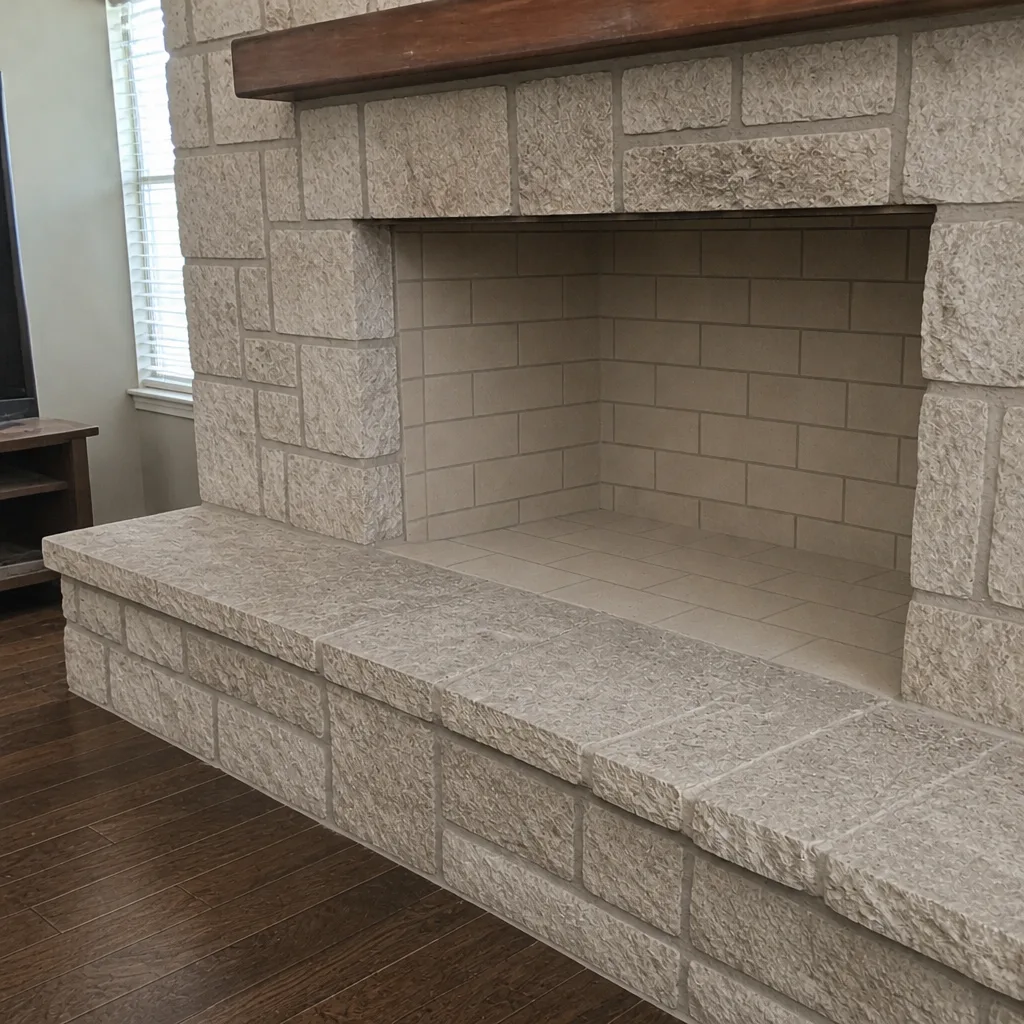
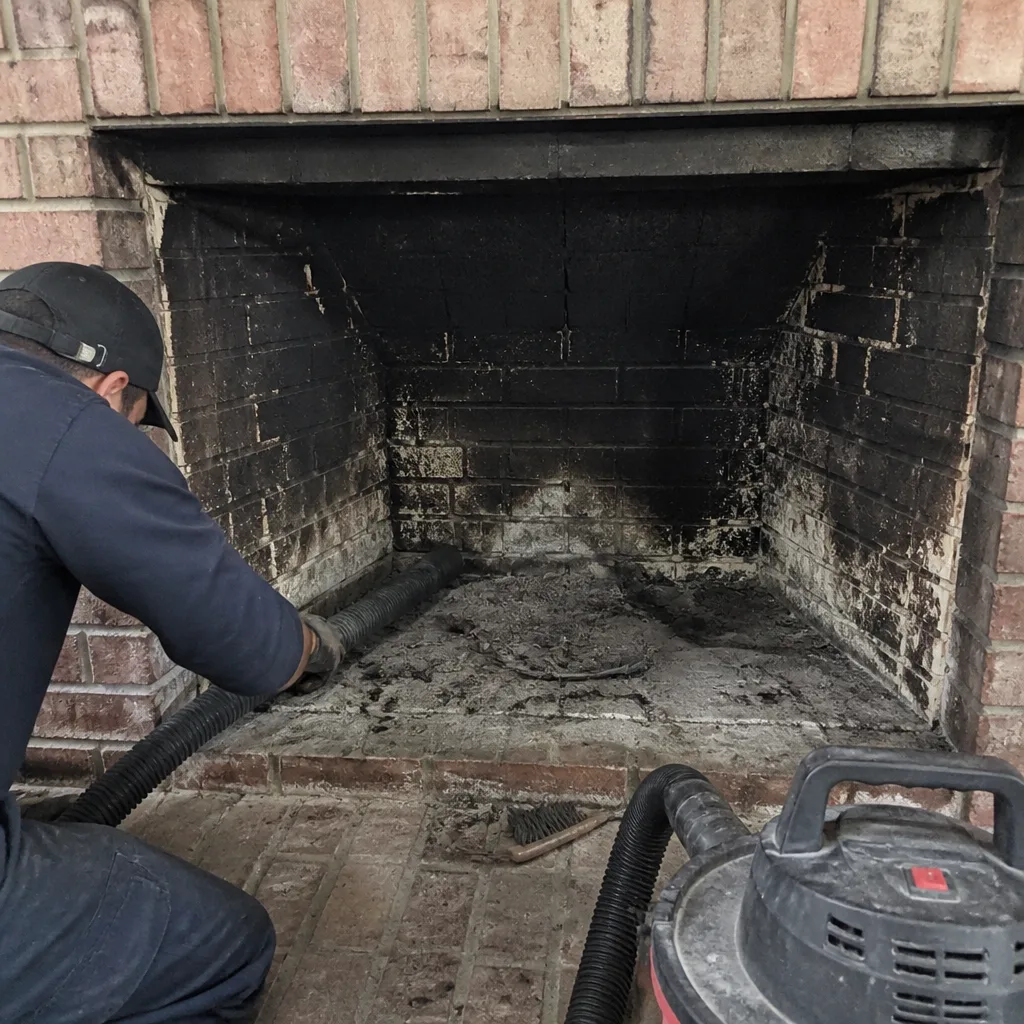
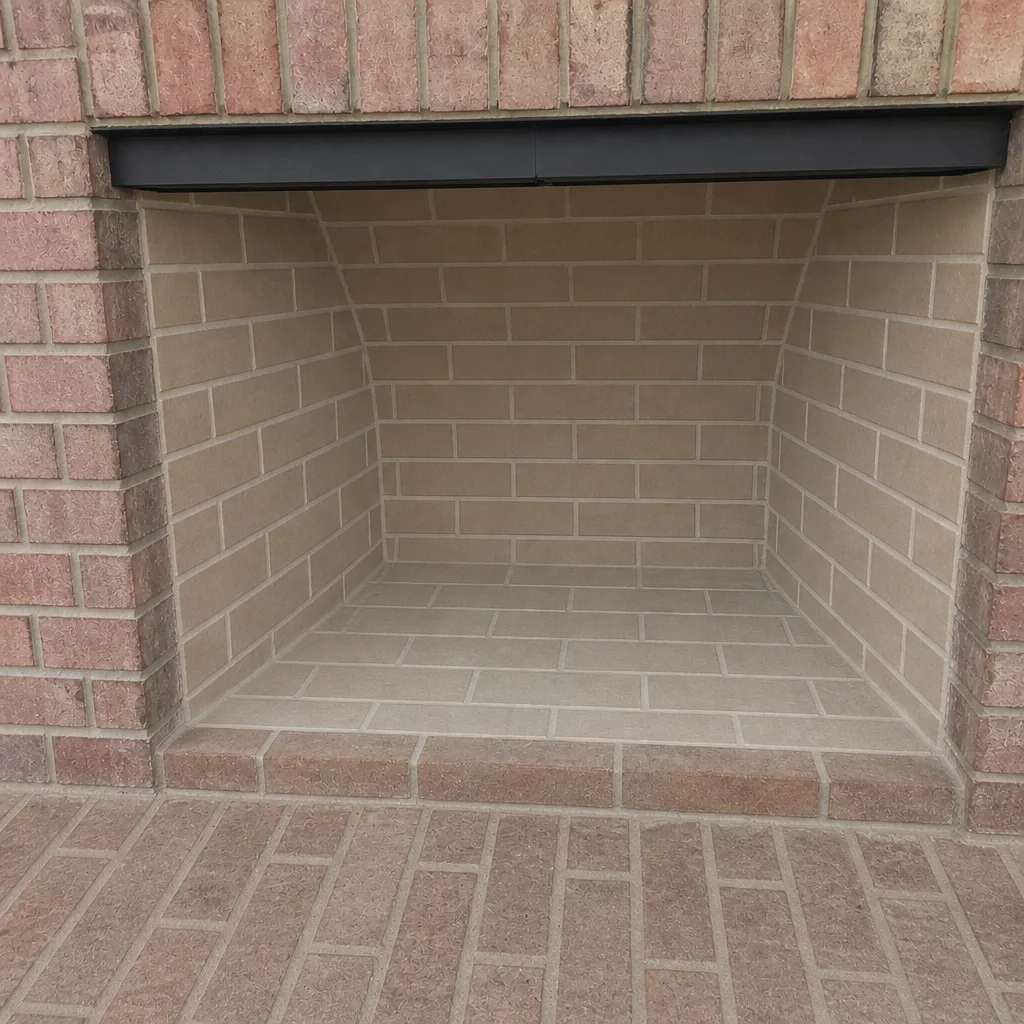
See the difference
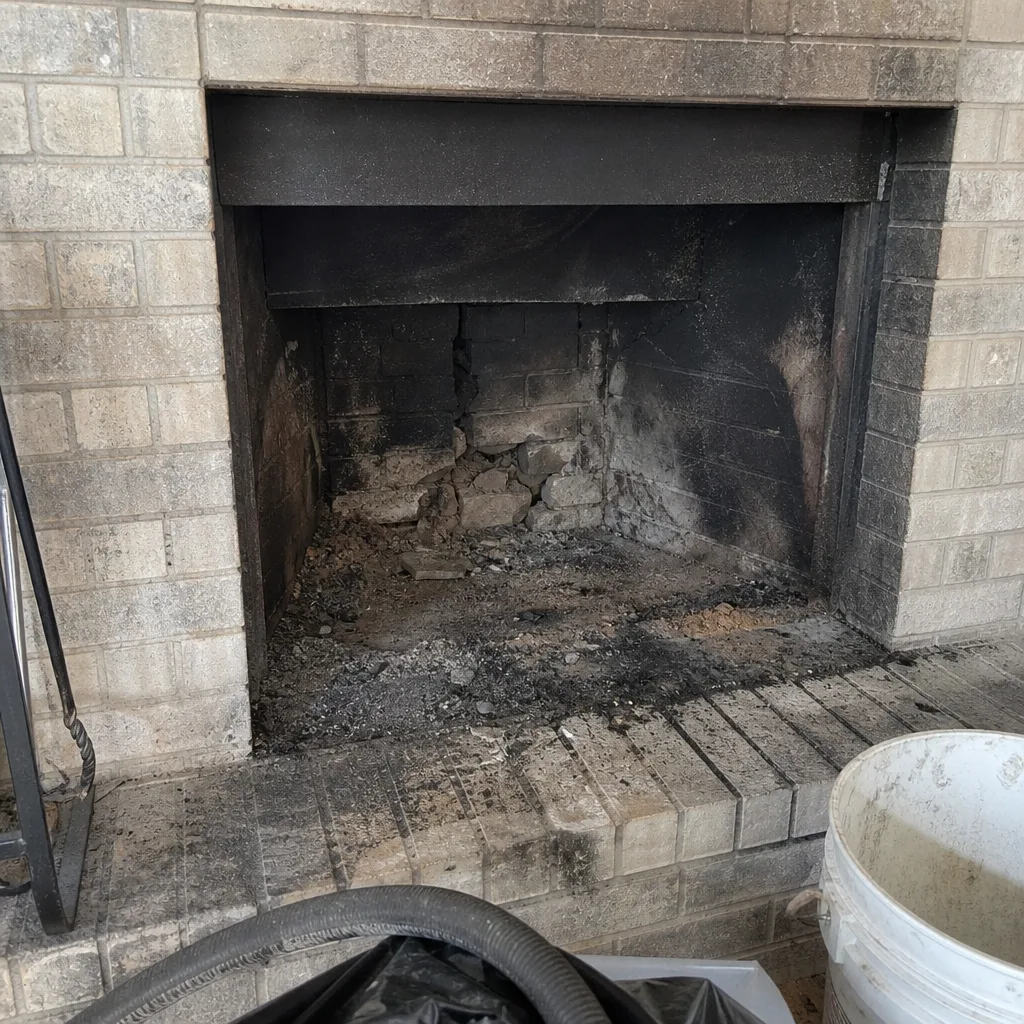 Before
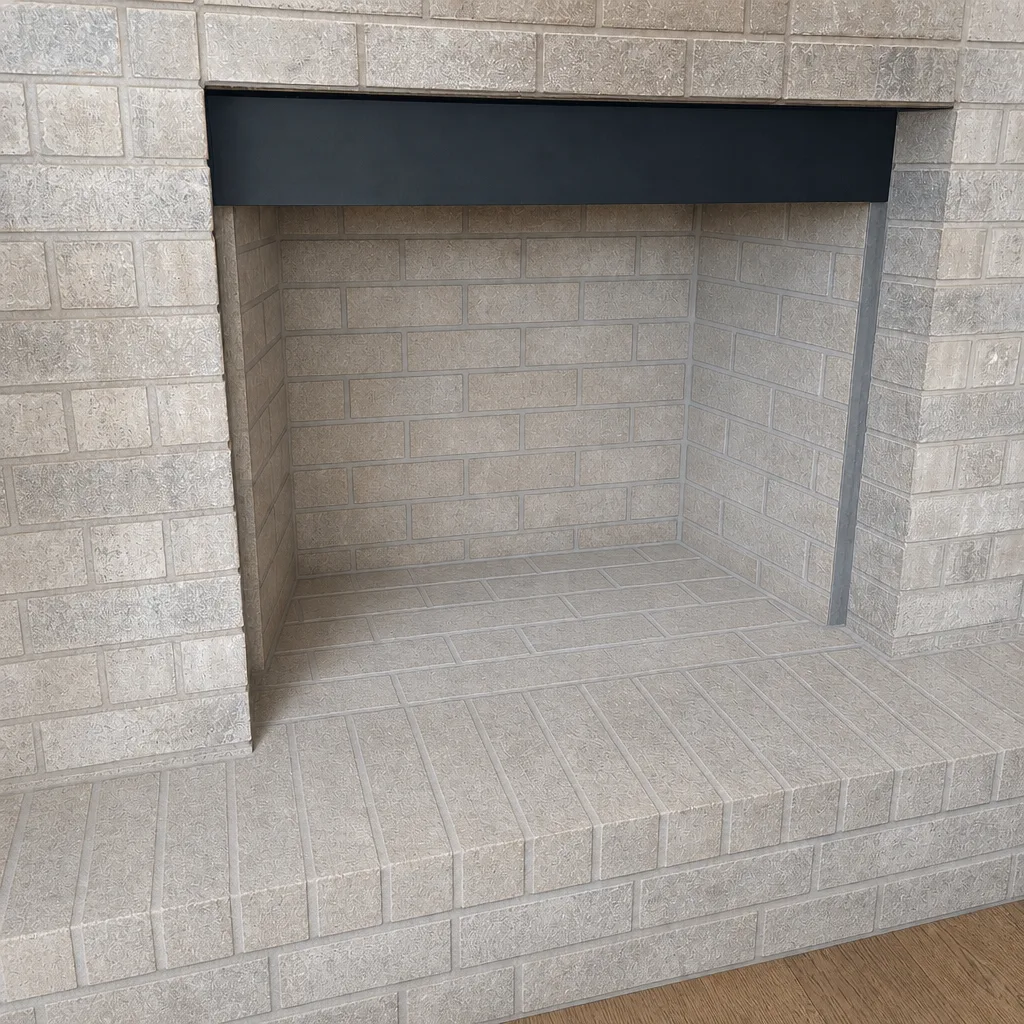 After
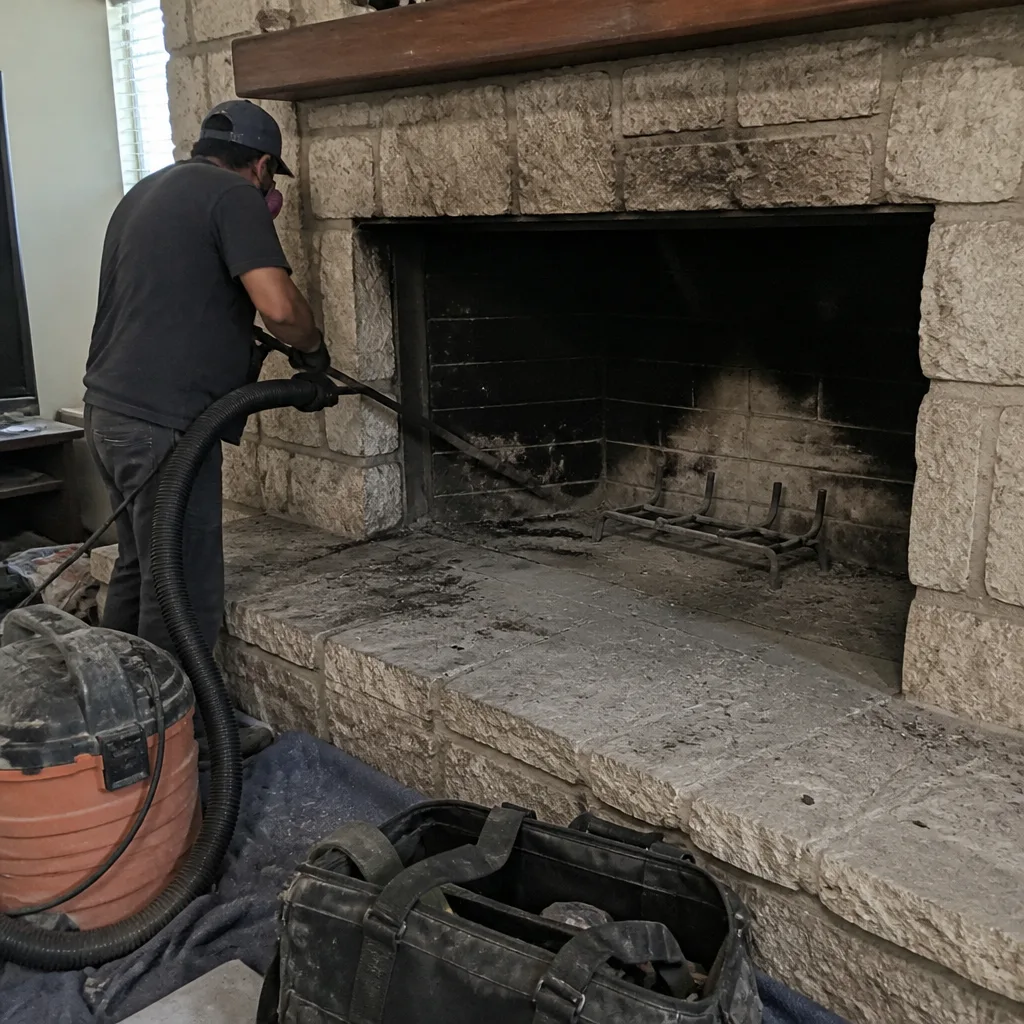 Before
 After
 Before
 After
When to Call a Professional
Some things are worth calling about. Smoke that rolls back into the room more than once is worth a call. Any odor that smells like dead animal, sulfur, or fresh creosote is worth a call. Visible cracks in the firebox, crumbling mortar, or a cap that’s missing or damaged is worth a call. A chimney that smoked fine last year and smokes every fire this year is worth a call. If a homeowner is buying or selling a home and the chimney is part of the transaction, a standalone inspection is worth a call. And any crack in the flue tile, any sign of a failed lining, or a flue that’s mismatched to the appliance is a same-week call, not a seasonal one. Chimney Sweep Kingwood offers free estimates in Kingwood. Call (844) 960-2344. We answer 24/7, and fast dispatch runs from 7am to 7pm, Sunday through Friday.
Frequently Asked Questions
The cost of a chimney sweep in Kingwood depends on the flue, the level of buildup, and whether an inspection is included. We set the price per job by a written estimate after we’ve looked at the chimney, so there’s no flat-rate menu to compare against a competitor’s flat rate. Call (844) 960-2344 for an exact quote. Estimates are free.
Only if the flue tile is cracked, separated, or undersized for the appliance, and only after an inspection confirms it. A cracked tile doesn’t automatically mean a full reline – when the chimney structure is sound, ceramic resurfacing with a system like HeatShield is sometimes a code-compliant alternative. If a contractor recommends a reline without having scoped the flue, ask for the inspection findings first. The written estimate sets the final price, and nothing is recommended without camera evidence you can see for yourself.
The general rule most chimney professionals use is once a year when the fireplace is used regularly, plus an inspection to go with it. For a Kingwood homeowner who burns a fire a few times a month in the cooler season, an annual sweep in late summer or early fall keeps the flue clean and the inspection current. Wood that’s burned wet or green creates creosote faster and shortens that interval. Call (844) 960-2344 for an exact quote – estimates are free.
Creosote builds up on the flue walls and, depending on the wood and the burn temperature, can reach a stage that’s flammable. A hot fire or a spark can ignite it. The other risk is carbon monoxide – a partially blocked or deteriorating flue can let combustion gases back into the living space instead of venting them outside. Neither risk announces itself with a warning sign before it becomes a call for help. If it’s been more than a year, sweep it. When the inspection shows the flue needs work, we’ll tell you plainly when it can safely wait. When it can’t, we’ll say so.
A cracked firebox often can be repaired. Hairline cracks in firebox mortar, deteriorated joints, or spalled brick can typically be repointed or rebuilt with the right refractory material. The fireplace itself rarely needs to be replaced unless the firebox structure has separated from the surrounding masonry or the chimney structure is unsound. The inspection tells you which category you’re in: fireplace repair or chimney repair. Call (844) 960-2344 for an exact quote – estimates are free.
That pattern usually means the chimney is fighting external pressure rather than dealing with a blockage. Low pressure systems, windy days, or the hours after a temperature swing can change how your house and the chimney interact. The fix depends on what the inspection shows: cap height, flue geometry, or house pressure through open ventilation. It’s worth a diagnosis rather than guesswork, because the right answer is cheap and the wrong answer (installing a taller cap when the problem is pressure) isn’t. Call (844) 960-2344 for an exact quote – estimates are free.
The Bottom Line
Most chimney problems are diagnosable, and most of them are fixable. The mistake is assuming the symptom tells you the cause. Smoke backdraft, cold-flue reversal, blockage, and negative house pressure all look similar from the sofa, but they need four completely different fixes. The same is true of odor: a musty smell, an acrid smell, and a sulfur smell each point somewhere different inside the chimney system. Get the diagnosis right before you commit to a repair. The honest sequence in Kingwood is a sweep, a camera inspection, and a written estimate – and then the fix that actually matches the finding. From sweep to structural repair, we handle the full lifecycle of the chimney system in Kingwood so you don’t have to coordinate multiple contractors. Call (844) 960-2344 for an exact quote. Estimates are free.
Written by the team at Chimney Sweep Kingwood.