
Last updated November 22, 2026
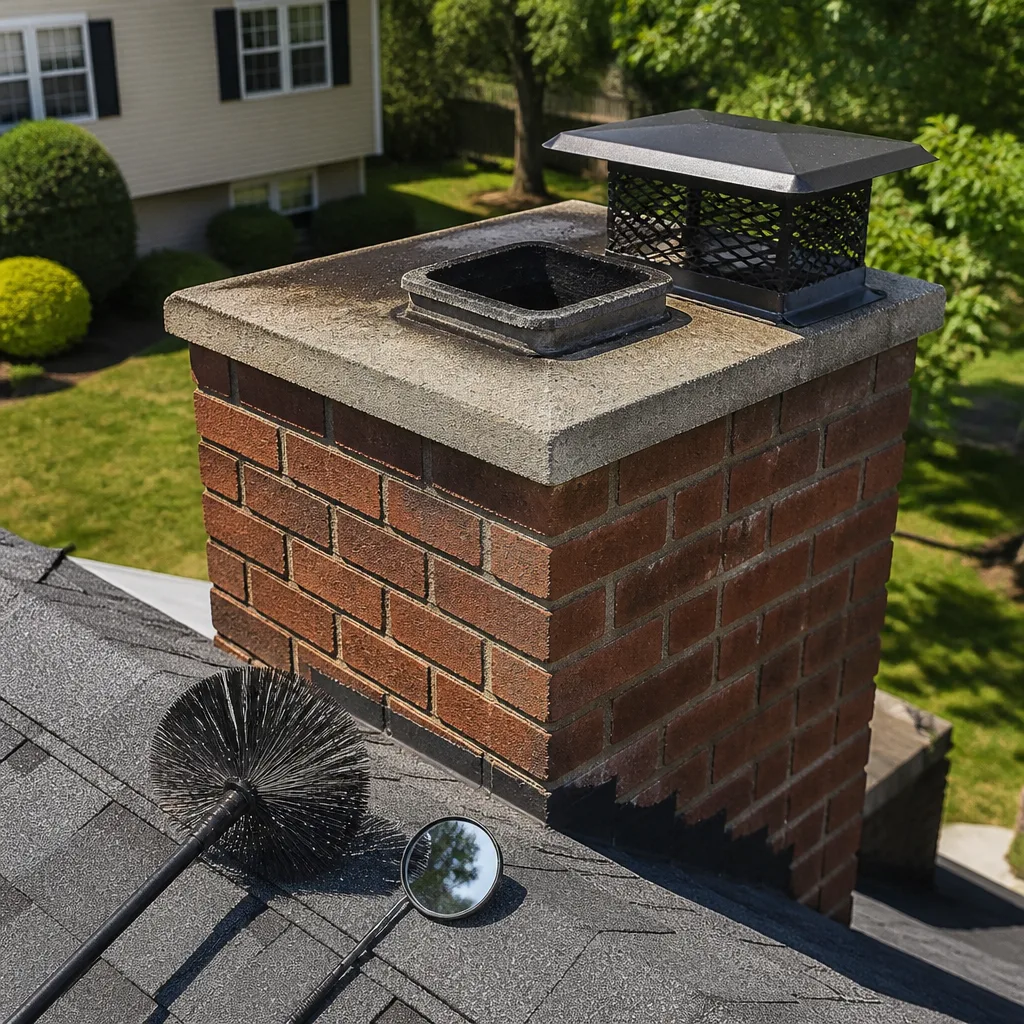 Sweep & inspection
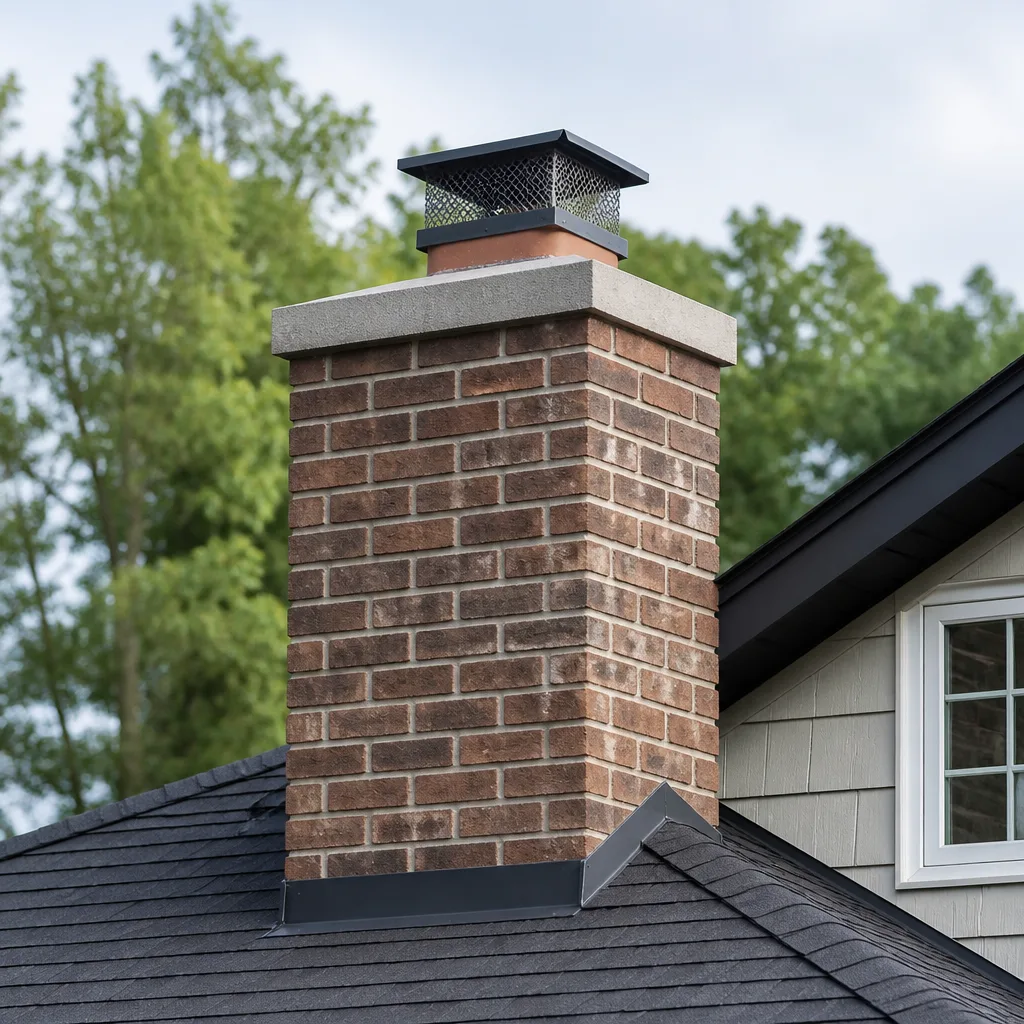 Caps & crowns
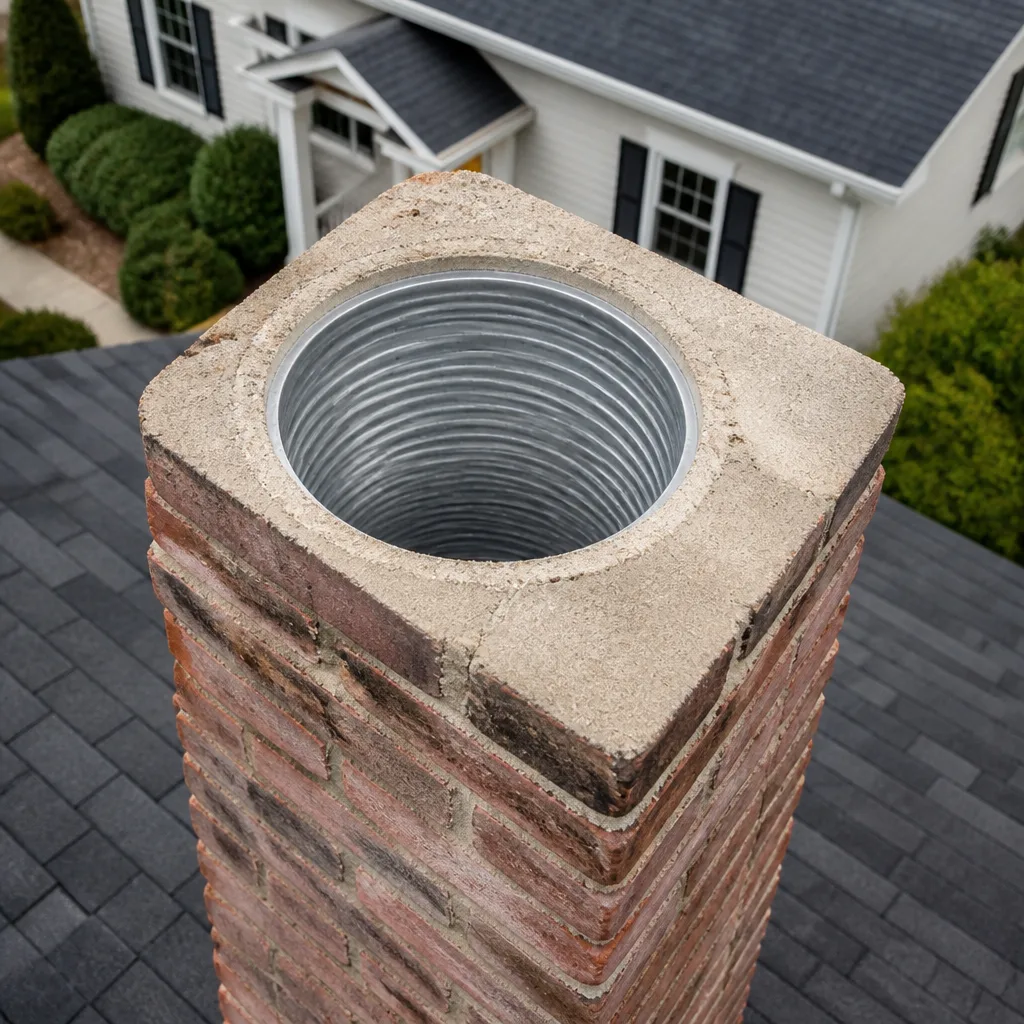 Flue relining
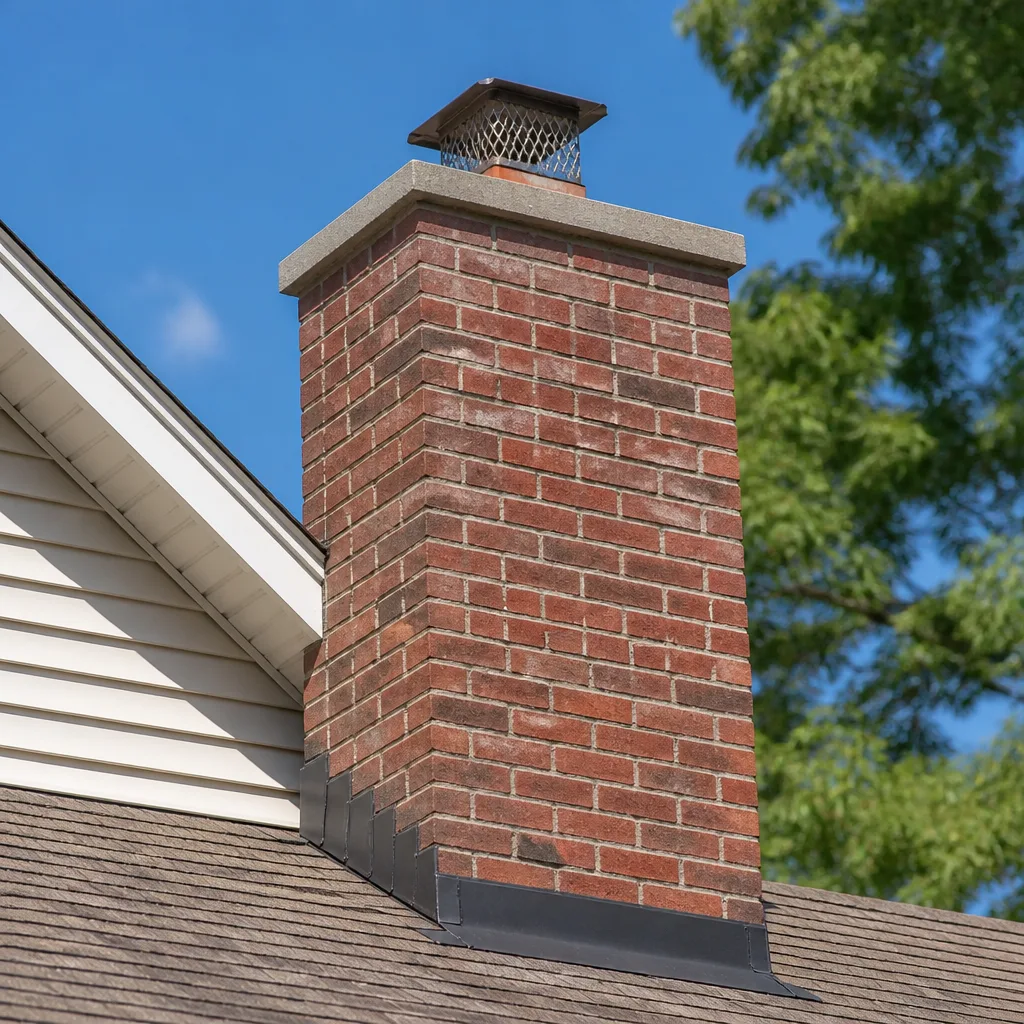 Masonry repair
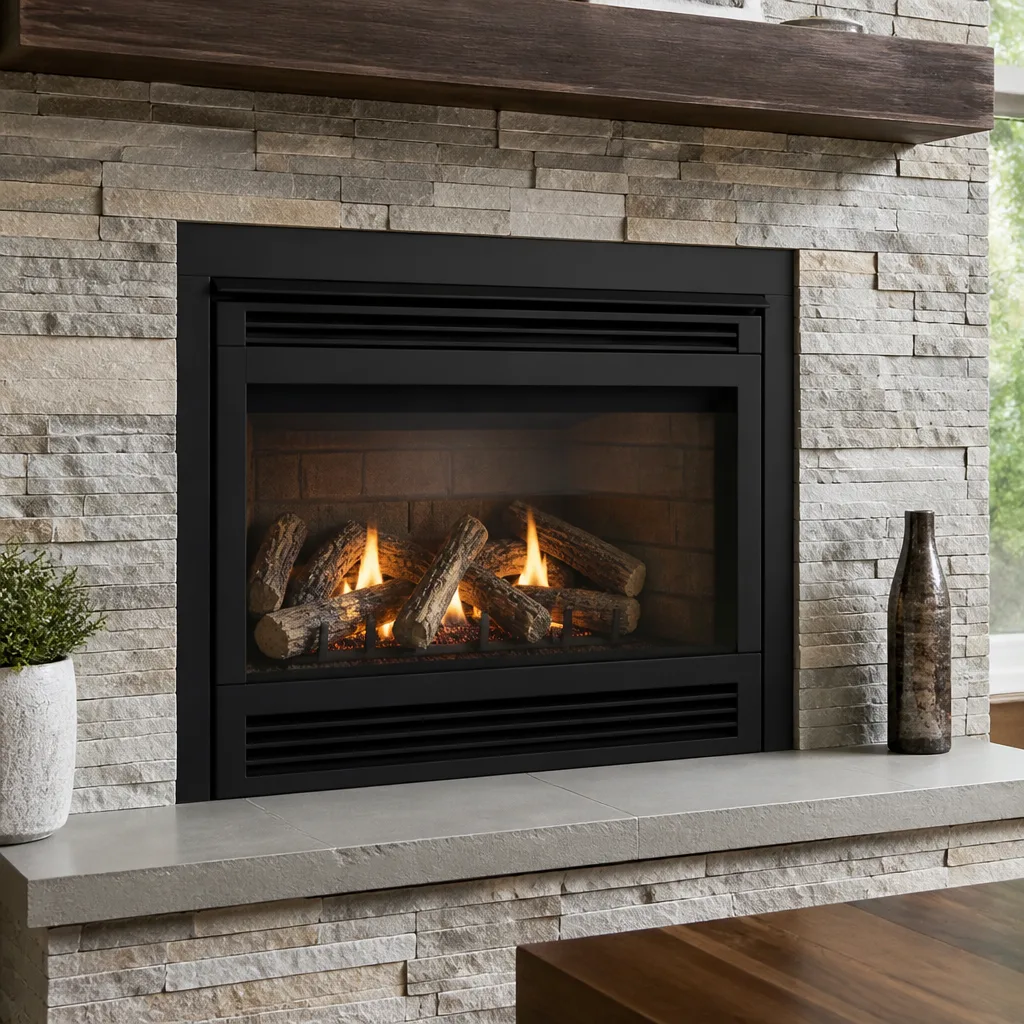 Gas fireplace service
Level 1 sweep and inspection to the NFPA 211 annual standard - flue, crown, cap, and flashing checked and photographed
Chimney sweep logs do not sweep chimneys. They loosen some creosote - which then falls where a brush and vacuum still have to collect it.
Seasonal Chimney Cleaning Care for Kingwood: Year-Round Homeowner’s Guide
Most chimney advice assumes a cold climate with a long, hard burn season and a short, quiet summer. Kingwood is the opposite. Here, a fireplace sits idle for roughly eight months of heat and humidity, and that dormancy, not fire use, is when most water infiltration, animal nesting, and mortar decay actually take hold. The months when you’re not burning are the months your chimney is quietly working against you. This guide walks through what happens inside a Kingwood chimney from spring through winter, what to check in each season, and when a task is a homeowner’s job versus a professional’s. By the end, you’ll know how to keep a Kingwood chimney safe and sound across the whole year, not just the handful of weeks you light a fire.
Quick Answer
Seasonal chimney care in Kingwood means cleaning after the burn season (before summer heat sets in), inspecting the cap and crown after storm season, testing the draft before the first fire of fall, and assessing creosote buildup if you burn heavily through winter. The humid off-season is when moisture damage, nesting, and mortar decline happen, so the spring and summer checks matter as much as anything you do while the fireplace is in use.
Styles & brands we work with
- Sweep & inspection
- Caps & crowns
- Flue relining
- Masonry repair
- Gas fireplace service
Table of Contents
- Why Kingwood’s Climate Is Hard on Chimneys
- Spring: Clean Before the Heat Settles In
- Summer: Cap and Crown Inspection After Storm Season
- Fall: The Pre-Season Startup Checklist
- Winter: Mid-Season Creosote Assessment
- A Year-Round Care Calendar for Kingwood
- Common Mistakes to Avoid
- When to Call a Professional
Why Kingwood’s Climate Is Hard on Chimneys
A chimney in a cold climate faces one main enemy: fire and the creosote it leaves behind. A chimney in Kingwood faces a second enemy that gets far less attention, and that’s the long, hot, humid stretch when the system is completely idle. Between roughly March and October, a Kingwood chimney experiences repeated thermal expansion and contraction as the masonry heats in the afternoon and cools at night. Add humidity cycling on top of that, with moisture pushing into and out of the pores of brick and mortar, and you get slow, quiet wear that has nothing to do with whether you ever light a fire.
Mortar joints are the most vulnerable part of that cycle. Brick is relatively tough, but the mortar between bricks is softer and more porous. Each time it takes on moisture and then dries out, it weakens a little. Over several summers, that shows up as crumbling or receding mortar lines, which is the start of spalling, where the face of a brick flakes off. By the time a homeowner notices a crumbly joint near the roofline, the damage has usually been developing for more than a season.
There’s a third factor specific to the humid off-season: nesting. A chimney with no cap, or a damaged one, is an open column of warm, dry, protected space, and it’s exactly the kind of place birds and other animals look for. Kingwood’s tree cover and greenbelts make that more likely, not less.
None of this means the burn season is unimportant. It means the chimney is a year-round system, and in this climate the care calendar has to cover all twelve months. The fireplace and venting portion of that system is worth understanding in depth, which is why a dedicated overview of how we approach a Chimney Sweep Kingwood job can be a useful companion to this guide.
Spring: Clean Before the Heat Settles In
The single most important seasonal task in Kingwood is a cleaning right after the burn season ends, before the heat of summer. In a dry climate, a spring sweep is mostly about clearing out the flue for next year. In a humid climate, it’s about something more urgent: the residue left on the flue walls from the last fires of the season.
Creosote is acidic. When it sits on the inside of a flue through a hot, humid summer, moisture in the air combines with that residue and the corrosion happens faster than it would in dry air. That’s the argument for cleaning in spring rather than waiting until fall, and it’s the point most generic seasonal guides skip right past. A flue swept clean in spring goes into summer’s humidity with nothing on the walls to react to.
What a spring cleaning should cover
- Full sweep of the flue to remove creosote and soot left from the burn season.
- A visual check of the firebox and damper for anything worn or stuck.
- A look at the smoke chamber and shelf for buildup the fire itself doesn’t burn off.
- Confirmation that the cap is still seated and clear.
A routine chimney sweep in spring sets the system up to survive the off-season with the cleanest possible starting point. If your chimney hasn’t been swept in several years, spring is also the right time to get a baseline inspection so you know what condition it’s actually in going into summer, rather than finding out in October.
Summer: Cap and Crown Inspection After Storm Season
Summer in Kingwood is when the storm damage from spring and early summer weather reveals itself. Wind-driven rain, hail, and the general battering that comes with Gulf Coast weather all hit the top of a chimney first, because it’s the highest, most exposed thing on many homes. The cap and crown take that load, which is exactly why they need a close look in summer, before the next set of storms.
The cap is the cover over the flue opening, and the crown is the sloping concrete or masonry slab at the very top of the chimney structure. Both protect the flue and the structure below from water. A crown that has cracked, or a cap that’s been knocked loose or dented, lets water in where it shouldn’t go, and by the time that shows up as a stain on the ceiling, the water has already been finding its way down for a while.
What to check on the cap and crown in summer
- Look at the crown for cracks, chips, or a slope that no longer sheds water away from the flue.
- Check that the cap is still fastened down and that its mesh or louvers aren’t clogged or bent.
- Confirm no nesting material or debris is sitting on top of or inside the cap.
- Look at the flashing where the chimney meets the roof for lifted or separated edges.
- Note any spalling or loose brick around the top of the structure.
If the crown has failed, it can often be rebuilt or resurfaced rather than left to let water into the masonry. A properly installed chimney cap & crown protects the whole system from rain and from the animals that would otherwise move in during the summer. For the cap and crown, we work with professional-grade brands like Copperfield and Olympia Chimney, so the hardware on top of your chimney is built to last through another storm season.
Fall: The Pre-Season Startup Checklist
Before the first fire of the year, the most useful thing you can do is test the draft. A chimney that drew fine last winter can draw poorly after a summer of idling, especially if a bird built a nest or the cap got clogged. Testing draft first means you find out the chimney isn’t drawing on a cool evening with a small test fire, not in the middle of a cold snap when the house is full of guests.
Draft is simply the movement of air up and out of the chimney. If the flue is restricted, the smoke has nowhere to go but back into the room, which is both unpleasant and a sign something needs attention. The fix is often simple, but you have to know it’s needed before the fire is already lit.
Pre-season startup checklist
- Open the damper and confirm it moves freely and stays open.
- Look up the flue from the firebox with a light for obvious blockages.
- Light a small test fire and watch the smoke; if it rolls back into the room, stop and call a professional.
- Check that the cap is clear and the crown is intact from the ground or a safe vantage point.
- Confirm the firebox and hearth are clean and free of debris from the off-season.
If the firebox or damper shows wear from the summer, a bit of fireplace repair before the burn season starts is easier to schedule than a fix in the middle of winter. Fall is the natural time to handle the smaller repairs so the bigger, structural ones don’t pile up later. Our technicians have up to 8 years of experience checking exactly this kind of pre-season condition, and we tell you what your chimney actually needs rather than what’s convenient to sell.
Winter: Mid-Season Creosote Assessment
For anyone burning a lot, Kingwood’s mild winters still allow a real burn season, and creosote builds up as the fires pile up. Creosote is the residue of incomplete combustion, and it comes in stages, from a light, flaky soot to a hardened, glazed layer that’s much harder to remove and much more flammable. The rule of thumb many chimney professionals use is that a chimney should be swept when the creosote layer reaches about an eighth of an inch, or once a year for a regularly used fireplace. If you’re burning more than about ten fires in a season, it’s worth having the flue assessed mid-season rather than waiting for spring.
A mid-season assessment isn’t the same as a full cleaning every time. Sometimes the flue is fine and the call is a quick, reassuring check. Sometimes it’s a genuine in-season cleaning because the buildup has reached the point where it matters. Knowing which is which is the value of the assessment, and it’s why we don’t recommend sweeping every flue on a fixed schedule that ignores how the fireplace is actually used.
When to call for an in-season cleaning versus waiting until spring
- Call mid-season if you burn frequently, notice a stronger smell, or see a dark, sticky glaze at the flue top.
- Wait until spring if the flue was swept in spring, you burn only occasionally, and the winter has been light.
- Call right away if you smell smoke indoors during a fire, or if the draft has dropped noticeably.
For mid-season cleaning and inspection work, the professional-grade brands we use matter. A flexible liner from a maker like DuraFlex handles flues that aren’t straight, which is common in older Kingwood homes, and it’s the kind of system that keeps working through many seasons of use. When a mid-season assessment turns up a flue that needs more than a cleaning, that’s the point at which we look at the whole system rather than just the buildup.
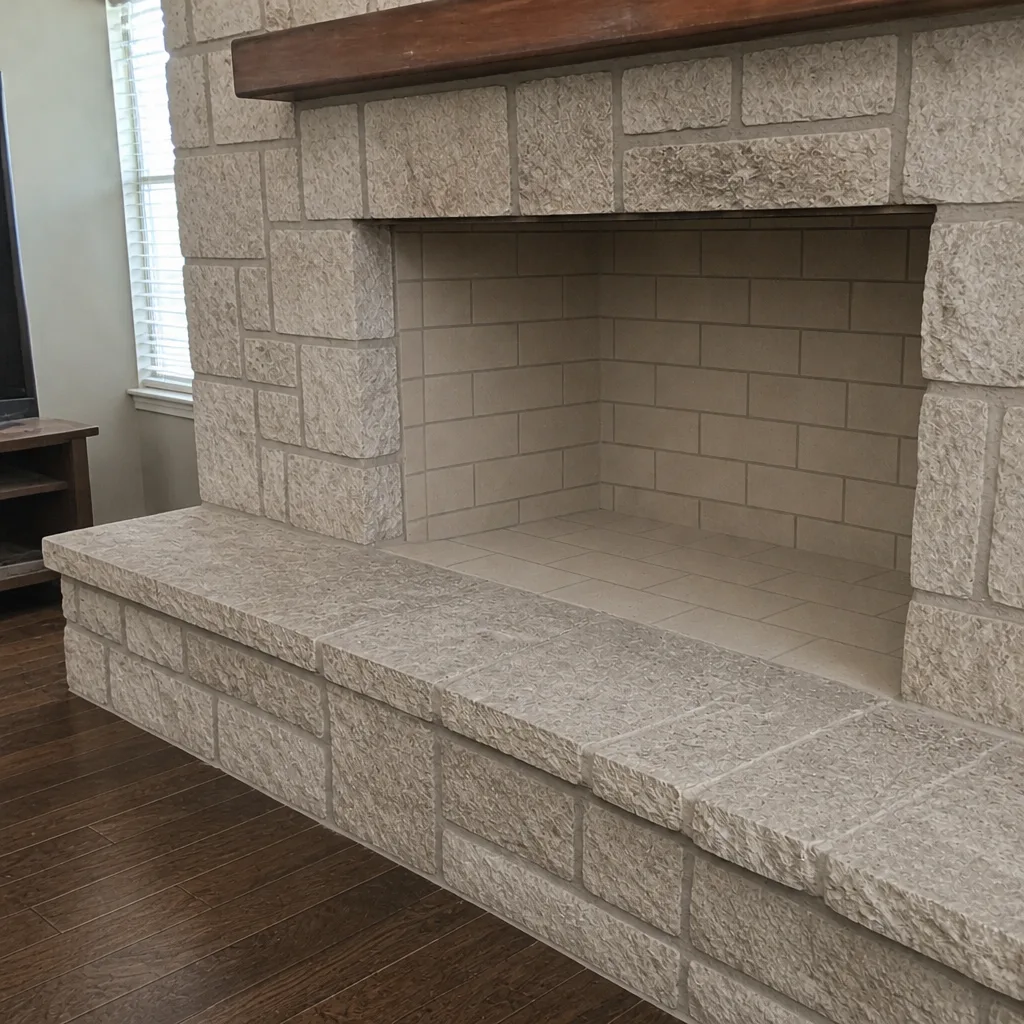
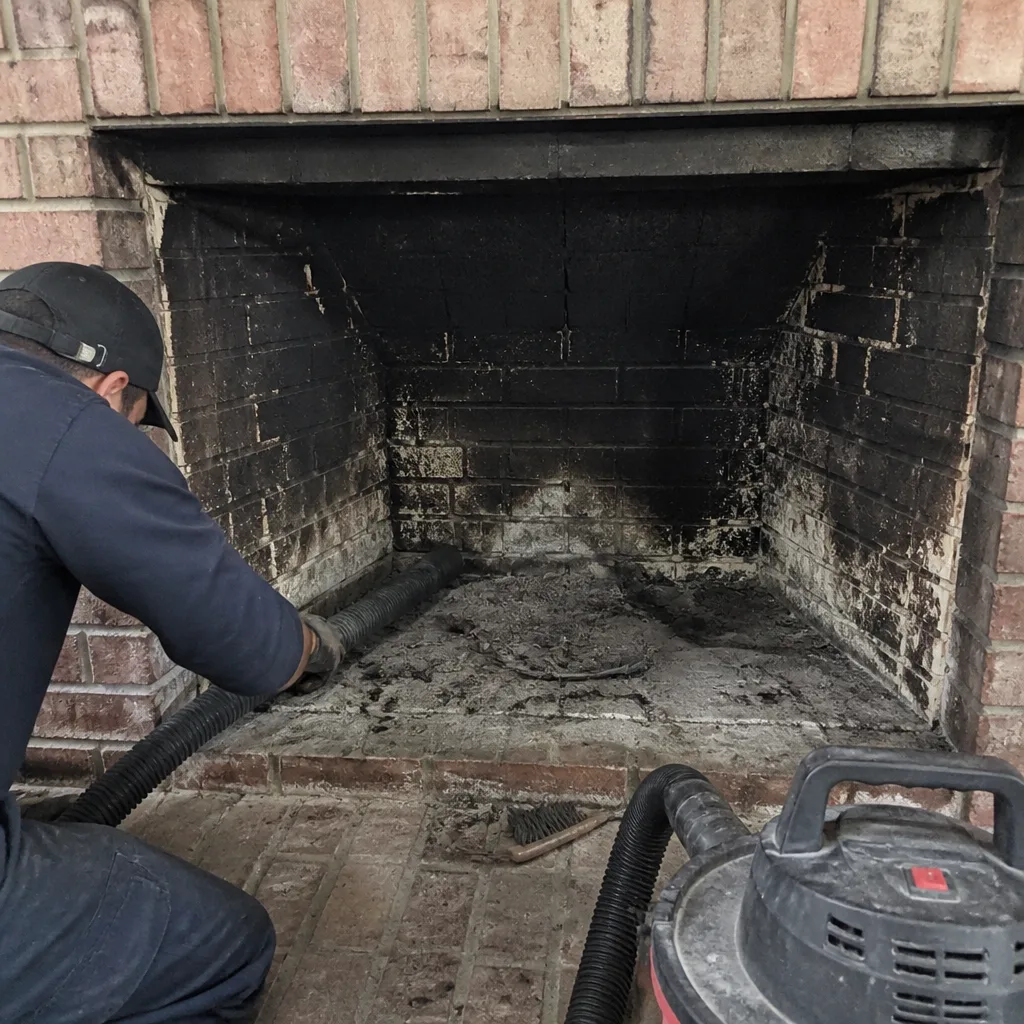
See the difference
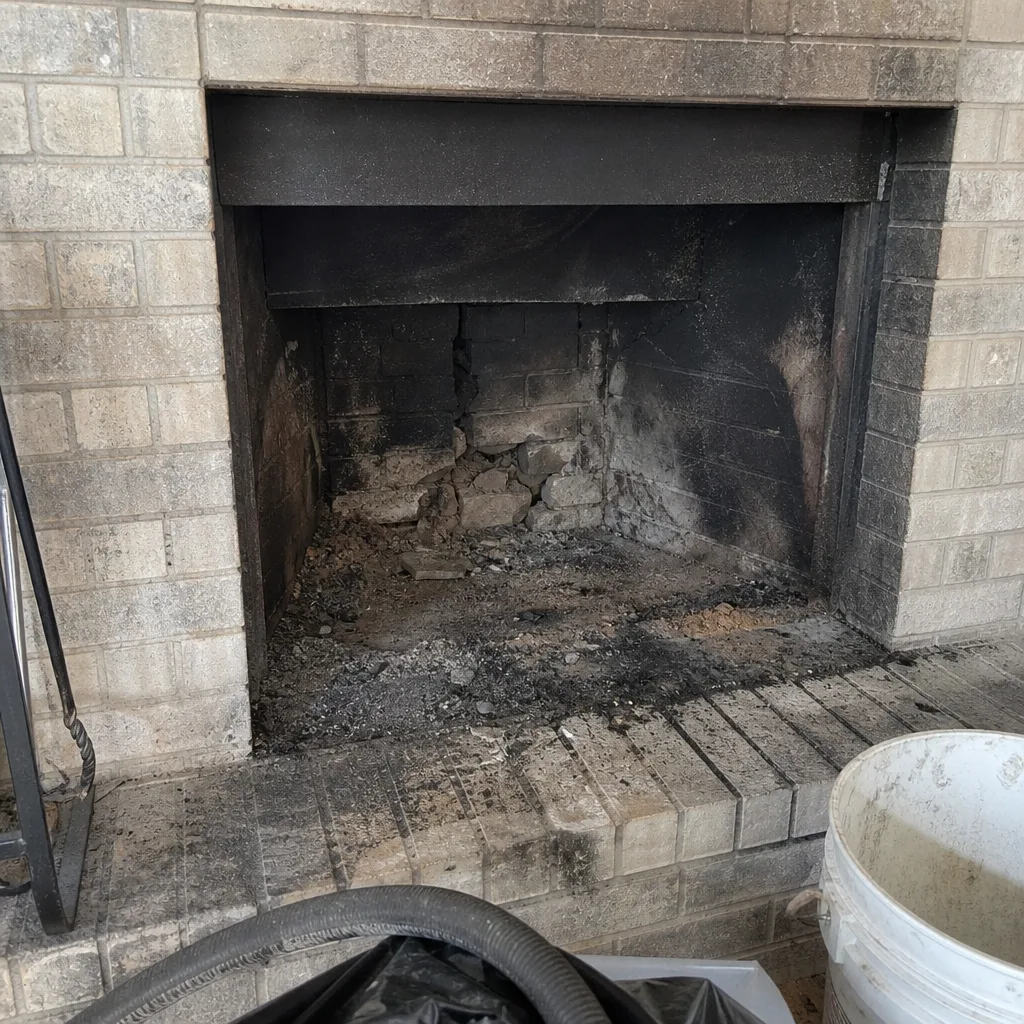 Before
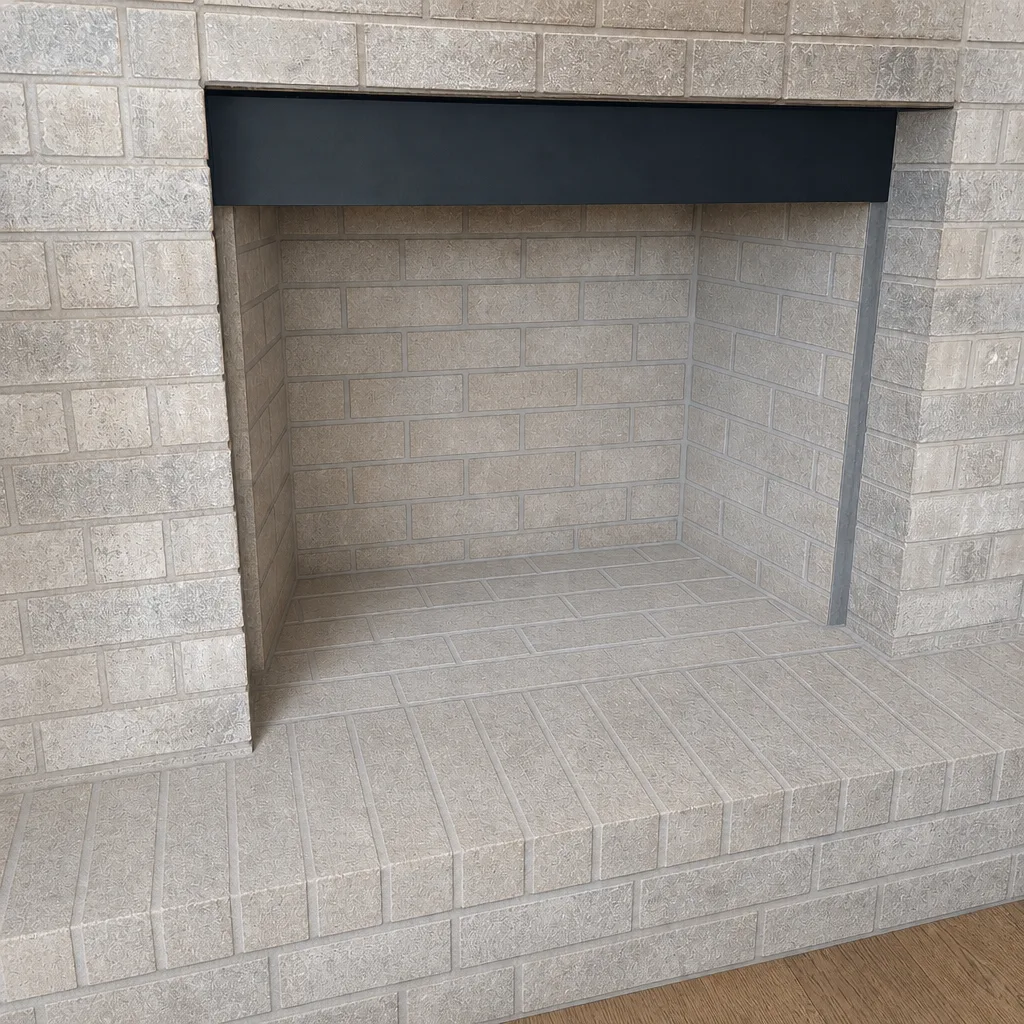 After
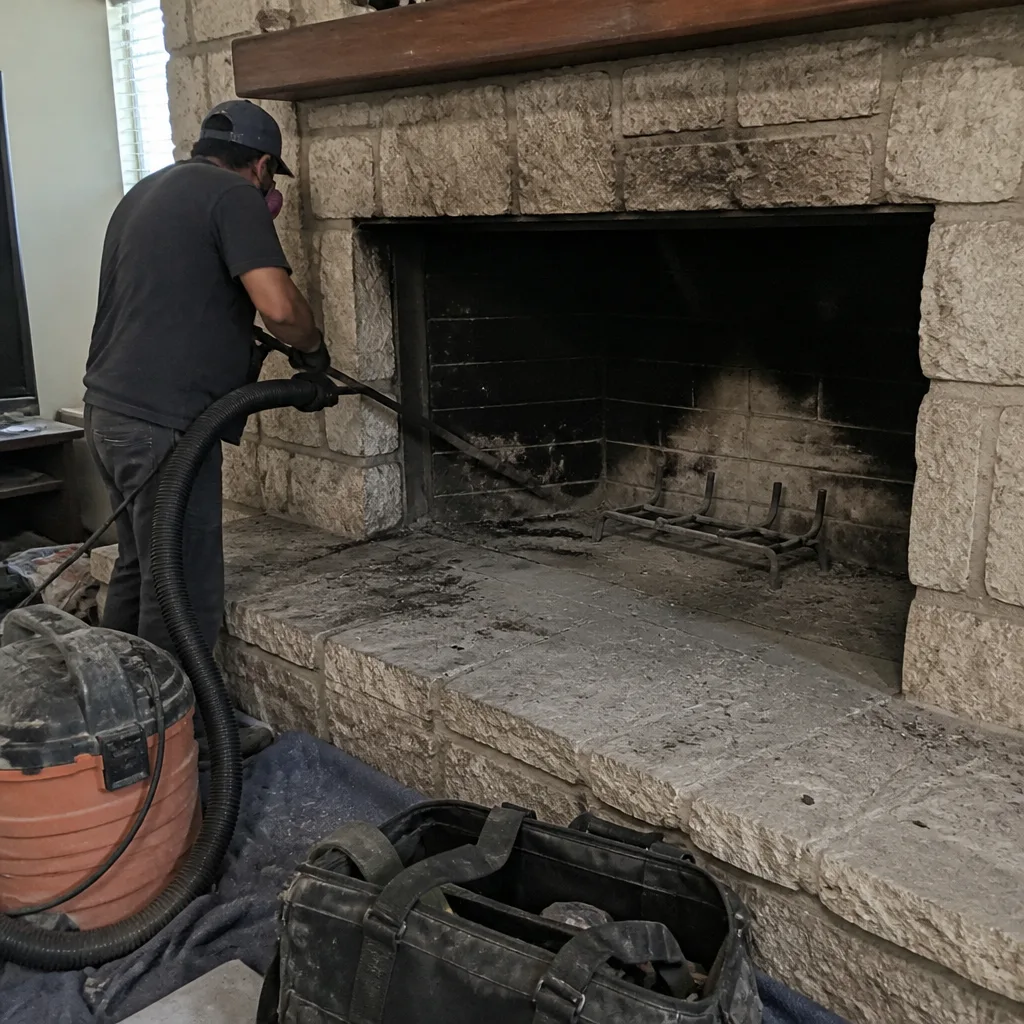 Before
 After
 Before
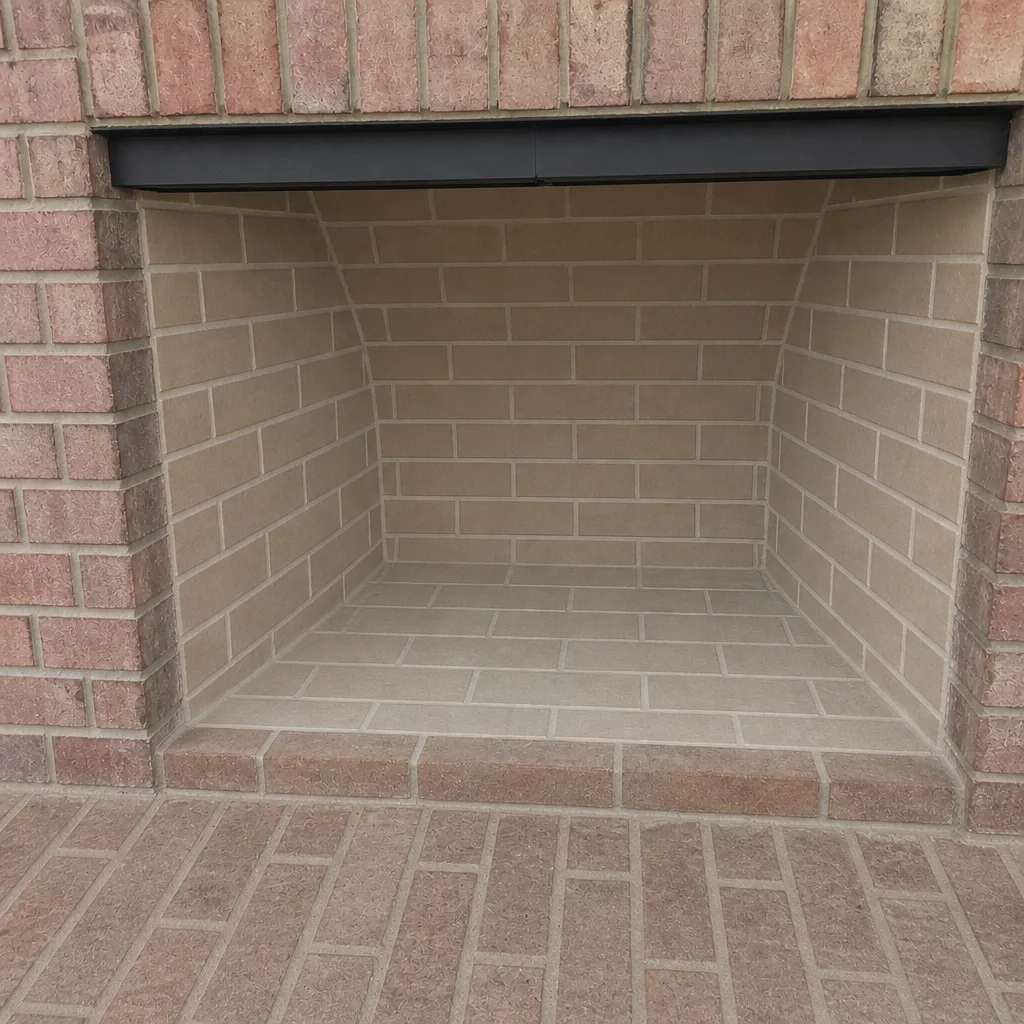 After
Seasonal Care and Air Quality Inside the Home
Here is something homeowners rarely connect: the condition of a chimney through the off-season affects what happens inside the house, not just the structure outside. A blocked or poorly capped flue can pull in air from places you don’t want it, and a firebox that hasn’t been cleaned since spring can hold smells and moisture that find their way into the living space. The seasonal care calendar is a comfort and air-quality calendar as much as a structural one, and in a humid climate that’s a bigger deal than most people assume.
Keeping the system clean through the off-season means the first fire of fall starts from a clean baseline, with a flue that hasn’t spent the summer accumulating moisture-driven problems. If you’d rather have one trusted point of contact for sweeping, inspection, caps, crowns, and liner work than coordinate several different trades, that’s how we’re set up: from sweep to structural repair under one roof, with single-company accountability from inspection through repair. The Chimney Sweep Kingwood hub page lays out the full range of services, and the individual service pages go deeper into each one.
A Year-Round Care Calendar for Kingwood
If you’d rather have the whole year in one place, here’s a straightforward seasonal calendar. The goal isn’t to do every task every year; it’s to know what each season is for, so nothing slips through the cracks.
Spring (March – May)
- Full sweep to clear creosote before summer humidity combines with acidic residue.
- Baseline inspection if the chimney hasn’t been checked recently.
- Confirm cap is seated and the crown is intact.
Summer (June – August)
- Post-storm inspection of cap, crown, and flashing.
- Check for nesting or debris at the top of the flue.
- Address any cracked crown or damaged cap before the next round of weather.
Fall (September – November)
- Pre-season startup check, including a draft test before the first fire.
- Verify the damper opens freely and the firebox is clean.
- Schedule any fireplace repair so it doesn’t wait until winter.
Winter (December – February)
- Mid-season creosote assessment if you burn more than about ten fires.
- Watch for smell, reduced draft, or smoke indoors, and call if you see them.
- Note any issues for the spring sweep rather than putting off an in-season check.
This calendar is a general guide, not a fixed rule. How often you burn, whether the fireplace is wood or gas, and what the previous season’s inspection found will shift the timing. The right calendar for your Kingwood home is the one shaped by what an inspection actually shows.
Common Mistakes to Avoid
- Waiting until fall to sweep. In a humid climate, the creosote left on the flue walls through a hot, wet summer is the bigger risk. Sweep in spring, not the week before you want to light a fire.
- Ignoring the crown until it leaks. A cracked crown lets water into the masonry, and by the time it shows up indoors, the repair is bigger. Have it checked every summer after storm season.
- Running a chimney for years without a cap. A missing or damaged cap is an open invitation to nesting and rain. In a greenbelt-rich area like Kingwood, animals will find an open flue fast.
- Testing draft with a full load of wood. Always test with a small fire so a draft problem shows up before you’ve filled the firebox.
- Burning through the winter on the assumption that the spring sweep will cover everything. If you burn heavily, a mid-season creosote check is worth the call.
- Accepting a big repair quote without seeing the evidence. Nothing should be recommended without a photo report or camera inspection you can look at yourself. Ask to see what the technician saw.
- Treating a gas fireplace as maintenance-free. Gas fireplaces still need the venting checked and the firebox cleaned; they just need it differently than wood-burning ones.
When to Call a Professional
Some of this care is a homeowner’s job. Checking the cap from the ground, opening the damper, and testing draft with a small fire are things you can do yourself. But a few situations call for a professional, and the safe course is to stop and call. Smoke coming back into the room during a fire, a strong creosote smell in the off-season, visible cracked crown or damaged cap, spalling brick near the top, or a flue that hasn’t been swept in several years all warrant a professional inspection. Chimney work involves real fire and, in some cases, height and structural risk, so if you’re not sure, that’s the answer: have it checked.
Chimney Sweep Kingwood offers free estimates in Kingwood. Call (844) 960-2344. We answer 24/7. Fast dispatch from 7am to 7pm, Sunday through Friday. The estimate is free and the price is set per job by the written estimate, so you’ll know exactly what your chimney needs before any work begins.
Frequently Asked Questions
Most wood-burning fireplaces in Kingwood should be swept about once a year, and the best time is right after the burn season. In this humid climate, a spring sweep matters more than a fall one, because it clears the acidic residue before summer moisture can work on it.
Even a handful of fires leaves creosote on the flue walls, and in Kingwood’s humidity that residue is the part worth clearing. A few fires means the buildup is light, but a quick spring sweep is still the simplest way to protect the flue through the off-season. Call (844) 960-2344 for an exact quote; estimates are free.
Yes, with a small test fire. Open the damper, light a small amount of wood, and watch the smoke. If it draws up and out, you’re good. If it rolls back into the room, stop and call a professional, because that usually means a restriction or a damaged component. Call (844) 960-2344 for an exact quote; estimates are free.
A loose or missing cap lets rain and animals into the flue, and the damage can start quickly in a humid climate. If you notice a damaged cap after a storm, have it checked rather than waiting for the fall. We install caps from professional-grade makers like Olympia Chimney and Copperfield.
Chimney care is priced per job by the written estimate, and the estimate is free. A routine sweep typically costs less than a liner or a crown rebuild, but the only reliable number comes from the written estimate after the chimney is inspected. Call (844) 960-2344 for an exact quote; estimates are free.
Sometimes not. A damaged flue can often be resurfaced with HeatShield rather than fully relined, which is why we look at the evidence from a camera inspection before recommending either. We don’t recommend a liner or any repair without showing you what we found and explaining the options, including when the work can safely wait.
Yes, but not in a way that makes it maintenance-free. A gas fireplace needs its venting checked and its firebox cleaned, just with different procedures than a wood-burning one. Gas appliances also pose a carbon monoxide risk if venting fails, so an annual check is worth keeping up.
Skipping it lets moisture, nesting, and mortar decay develop quietly through the off-season, and lets creosote build up during the burn season. The result ranges from an inconvenient repair to a genuine fire and carbon monoxide safety concern. It’s the reason we tell you what your chimney actually needs rather than sweeping on autopilot. Call (844) 960-2344 for an exact quote; estimates are free.
The Bottom Line
In Kingwood, chimney care is a year-round job, not a fall tradition. The humid off-season is when water, nesting, and mortar decay do their quiet damage, so the spring and summer checks carry as much weight as anything you do while the fireplace is in use. Clean in spring, inspect the cap and crown in summer, test the draft before the first fall fire, and assess creosote mid-winter if you burn heavily. Most of this is manageable yourself, but the moments that call for a professional are real fire and safety situations, and it’s worth calling early rather than late. Whether it’s a sweep, an inspection, or a repair, one call covers it from start to finish.
Chimney Sweep Kingwood handles the full lifecycle of a chimney system, from routine sweeping to structural repair, using materials the industry trusts. Our technicians have up to 8 years of experience working with professional-grade brands like DuraFlex and HeatShield, and we’re authorized to work with DuraFlex, HeatShield, Gelco, Olympia Chimney, Famco, and Copperfield. Inspections are available as a standalone service if you need one for a real-estate transaction or an annual safety check. When it’s time, call (844) 960-2344 for a free estimate. We answer 24/7. Fast dispatch from 7am to 7pm, Sunday through Friday.
Written by the team at Chimney Sweep Kingwood.